
Table of Contents
- 1 Replace Your Air Filter to Restore AC Airflow Fast
- 2 Reset a Tripped AC Circuit Breaker Safely
- 3 Check Your Thermostat Settings and Batteries First
- 4 Clean Outdoor AC Condenser Coils for Better Cooling
- 5 Clear Blocked Vents to Balance Airflow and Temperature
- 6 Frequently Asked Questions
- 6.1 What Are the Most Common Air Conditioner Problems?
- 6.2 What Is the 3 Minute Rule for Air Conditioners?
- 6.3 Does AC Dry Out Your Sinuses?
- 6.4 How Do I Reset a Bryant Air Conditioner?
- 7 Options Menu
Most AC problems Bucks County homeowners deal with don’t need a licensed HVAC technician from Doylestown or Newtown—they need five minutes of your attention. Whether you live in a historic colonial rowhouse in New Hope, a sprawling suburban split-level in Langhorne, or a newer development in Warminster or Chalfont, the same handful of fixable issues keep showing up season after season. A clogged air filter, tripped circuit breaker, or misconfigured thermostat can each make a perfectly healthy system act completely broken. This matters especially in Bucks County, where summer humidity rolling off the Delaware River and the region’s characteristic heat trapped between dense tree canopies in places like Perkasie, Quakertown, and Doylestown Borough pushes AC systems harder than homeowners often anticipate.
Dirty condenser coils quietly steal up to 30% of your system’s efficiency—a real problem when July temperatures in Levittown and Bristol regularly climb into the upper 90s with heat index values that make outdoor units work overtime. Blocked vents create those maddening hot and cold spots that plague the older two-story homes lining the streets of Yardley and Buckingham Township, where original ductwork was never designed for modern central air demands. Bucks County’s mix of aging housing stock, newer construction in places like Horsham and Upper Southampton, and the county’s distinctly humid continental climate all create conditions where these five common AC issues appear regularly and repeatedly. Each fix costs little to nothing, and we’ll show you exactly how to handle all five before you call anyone from Plumsteadville to Sellersville.
Replace Your Air Filter to Restore AC Airflow Fast
Swapping out a dirty air filter is one of the fastest, cheapest fixes Bucks County homeowners can make when AC feels sluggish or energy bills creep up during the region’s notoriously humid mid-Atlantic summers. From Newtown and Doylestown to Levittown and New Hope, residents across the county deal with seasonal humidity spikes that push central air systems into overdrive from June through September. A clogged filter starves your system of airflow, which can freeze your evaporator coils and cause short-cycling—serious damage from something as simple as a gray, dusty screen.
Bucks County’s mix of older colonial-era homes in Langhorne, mid-century ranch houses throughout Bristol Township, and newer subdivisions in Warminster and Warrington means air handler configurations vary widely. Homes near the Delaware Canal or along the creek corridors in New Hope and Yardley also contend with elevated moisture levels and organic particulates like pollen, mold spores, and tree debris—especially during the county’s heavy spring allergy season when sycamore, oak, and grass pollens blanket everything from Peddler’s Village in Lahaska to Peace Valley Park in Doylestown Township.
Turn off power to your air handler first, then install the correct filter size with the airflow arrow pointing toward the unit. Given Bucks County’s four-season climate—cold winters driven by nor’easters and lake-effect moisture pushing down from the north, and hot, sticky summers amplified by the Delaware River Valley’s geography—filter replacement frequency matters more here than in drier climates. Choose MERV 6–8 for standard use in newer, tightly sealed homes in areas like Horsham or Lower Makefield. Opt for MERV 11–13 if allergies are a concern, which is especially relevant for households near agricultural land in Plumstead Township, Hilltown, or Bedminster, where field dust, fertilizer particulates, and crop pollen are seasonal realities.
Homes with pets should replace filters every four to six weeks rather than the standard one to three months, a particularly common concern in Bucks County given the area’s high rate of dog ownership among suburban and semi-rural households. Local HVAC contractors serving the county—operating out of service areas in Langhorne, Chalfont, and Quakertown—consistently flag neglected filters as the leading cause of preventable system failures during summer peak demand. Keep extras on hand and set monthly reminders so you never miss an inspection, especially heading into July and August when Bucks County’s heat index regularly climbs above 95°F and your system has no margin for restricted airflow.
Reset a Tripped AC Circuit Breaker Safely
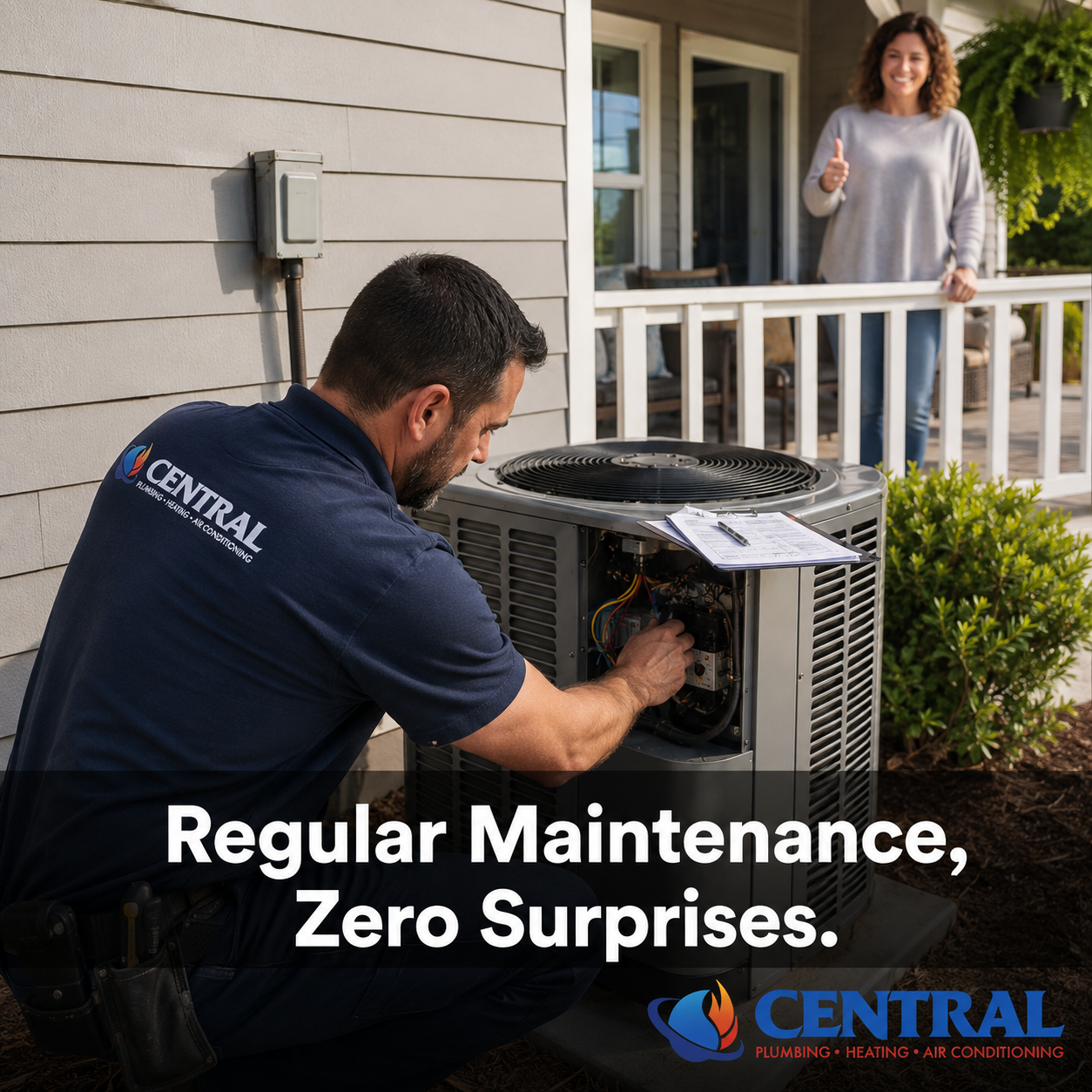
When your AC suddenly stops cooling on a sweltering Bucks County afternoon—the kind of humid, 95-degree day that rolls in off the Delaware River and settles over Doylestown, Newtown, and Langhorne like a wet blanket—a tripped circuit breaker is often the culprit, and it’s something homeowners can fix themselves in minutes.
Bucks County’s older housing stock makes this especially relevant. From the colonial-era row homes in New Hope and Bristol Borough to the mid-century ranchers scattered across Levittown and Warminster Township, much of the county’s residential electrical infrastructure was never designed to handle the demands of modern high-efficiency central air conditioning systems.
Add in the region’s notoriously muggy summers—amplified by proximity to the Delaware River, Neshaminy Creek corridors, and the low-lying terrain around Yardley and Morrisville—and HVAC systems run harder here than in drier climates, making tripped breakers a recurring reality for local homeowners.
Here’s how to reset a tripped AC circuit breaker safely:
- Locate the electrical panel — Find the breaker labeled “AC,” “Air Conditioner,” or “HVAC.” In many older Doylestown Borough rowhouses or Perkasie bungalows, the panel may be tucked in a basement utility room or an attached garage. Stand to the side of the panel door when opening it—never directly in front—to protect yourself from the rare but possible arc flash.
- Reset it properly — Before touching the breaker, switch your thermostat completely off. This is critical in homes running Carrier, Trane, or Lennox systems common throughout Chalfont, Horsham, and Warrington subdivisions. Wait 30 seconds to allow capacitors to discharge, then firmly flip the breaker all the way to the OFF position first, followed by a decisive push to ON. A half-reset is a common mistake that leaves the breaker in a false “on” state.
- Monitor the result — Return the thermostat to COOL and set it 5 degrees below the current indoor temperature. Wait 5 to 10 minutes for the compressor to restart and confirm that cool air is returning through the vents. On peak summer days in Bucks County—particularly during the extended heat waves that regularly push through the region from late June through early August—your system will be cycling at maximum capacity, so give it adequate time before concluding the reset failed.
If the breaker trips again immediately or within the first few minutes of operation, stop completely. Repeated tripping isn’t a nuisance reset situation—it is a system warning.
In Bucks County homes, this pattern frequently points to a failing compressor struggling against prolonged heat stress, deteriorating wiring in aging electrical panels common in pre-1980 construction throughout Bristol Township and Quakertown, or an overloaded circuit shared with other high-draw appliances. Given the county’s aging grid infrastructure and the surge in summer electrical demand across densely populated townships like Northampton and Lower Southampton, pushing a struggling system is a legitimate fire risk.
Shut down the AC entirely, turn the breaker to OFF, and contact a licensed HVAC technician or licensed electrician certified to work in Bucks County. Local contractors familiar with the region’s mix of older electrical panels, high-humidity compressor wear, and the specific load demands of Bucks County homes will be equipped to diagnose whether the issue sits with the air handler, condenser unit, or the electrical supply itself.
What begins as a five-minute breaker reset can escalate into a five-figure repair—or worse—when the underlying cause goes unaddressed through a Pennsylvania summer.
Check Your Thermostat Settings and Batteries First

Before you call a technician or climb into the attic to inspect ductwork, check your thermostat first—it’s responsible for more “broken AC” calls than most Bucks County homeowners realize, and fixing it costs nothing.
Bucks County summers are no joke. From the dense, humid heat that settles over New Hope and Doylestown to the radiant warmth that bakes the open lots in Warminster, Langhorne, and Levittown, your HVAC system works harder here than in most parts of Pennsylvania. That extra strain makes it easy to assume the worst when the air stops blowing cold—but the problem is often sitting right on your wall.
Start by confirming the thermostat is set to “Cool,” not “Heat” or “Off,” and the fan to “Auto.” Then drop the set temperature 5°F below the current room reading and wait 10–15 minutes. No response signals a real problem worth investigating further.
Homeowners in older Doylestown Borough row homes and the historic stone farmhouses scattered across Buckingham Township and Solebury Township are especially prone to overlooking this step, since their systems often involve older wiring and non-programmable thermostats that are easier to accidentally bump or misread.
Next, swap the batteries. A dimming display or blank screen means they’re drained, and weak batteries can prevent the system from responding entirely. Replace them every year—ideally in late April or early May, right before Bucks County’s heat season kicks in and before you need the system running reliably for summer.
Residents in Bristol Borough, Perkasie, and Quakertown dealing with older housing stock will often find that their thermostats are the last thing to get attention during seasonal maintenance, making dead batteries a surprisingly common culprit.
Also consider where your thermostat is mounted. Bucks County homes—particularly the sun-drenched colonials and split-levels throughout Horsham, Richboro, and Southampton—frequently have thermostats installed on walls that receive strong afternoon sunlight through large windows or open floor plans.
Direct sunlight or proximity to a floor lamp can skew temperature readings by several degrees, tricking the thermostat into thinking the home is warmer or cooler than it actually is, and causing the system to short-cycle or run longer than necessary.
If your thermostat sits near a south- or west-facing window common in the newer developments along Route 1 or near the Route 202 corridor, that placement alone could explain inconsistent cooling.
If you have a smart thermostat—increasingly common in the newer builds throughout Newtown Township, Lower Makefield, and Middletown Township—check your programmed schedule and your Wi-Fi connection as well. Smart thermostats that lose their network connection can revert to default settings or stop responding to manual adjustments altogether, leaving you sweating through a July afternoon in Yardley or Morrisville while the system sits idle for a purely digital reason.
Clean Outdoor AC Condenser Coils for Better Cooling

Once the thermostat checks out, your outdoor condenser unit deserves a close look—because a coil caked in cottonwood seeds, pollen, and Bucks County‘s notorious summer dust is quietly costing you money every time the system runs.
Bucks County homeowners face a particularly demanding environment for outdoor condenser units. The Delaware River corridor running through New Hope, Yardley, and Bristol generates elevated humidity levels that accelerate mold and mildew buildup on condenser fins. Residents near Tyler State Park, Core Creek Park, and Peace Valley Park deal with heavy tree pollen from dense oak, maple, and cottonwood canopies that blanket outdoor units season after season.
Communities like Doylestown, Newtown, Langhorne, and Warminster sit in low-lying suburban pockets where ragweed, grass pollen, and airborne debris concentrate during the region’s long, humid summers. Older historic neighborhoods in New Hope Borough, Perkasie, and Quakertown often feature mature landscaping that sheds seed pods, leaves, and organic debris directly into condenser units positioned close to hedgerows and garden beds.
The SEPTA rail corridors near Levittown, Cornwells Heights, and Croydon introduce diesel particulates and fine airborne carbon deposits that coat aluminum fins with a stubborn oily film. Farms and open fields across Upper Bucks—stretching from Plumstead Township through Bedminster and Hilltown—carry agricultural dust, fertilizer particles, and crop pollen that travels significant distances during dry summer wind events.
Even newer developments in Horsham, Warrington, and Chalfont face construction-season dust from active building projects throughout the county’s rapidly expanding residential corridors.
Here’s our simple process:
- Cut the power at both the outdoor unit and the main panel before touching anything—Pennsylvania electrical code requires full de-energization before any condenser maintenance.
- Clear the surrounding area of leaves, grass clippings, and organic debris, which accumulate heavily in Bucks County’s wooded and suburban settings, blocking airflow around the unit.
- Rinse fins from the inside out using a gentle garden hose spray—never a pressure washer, which bends delicate aluminum fins. Bucks County’s hard well water, common in Buckingham, Plumstead, and New Britain Township, can leave mineral deposits on fins, so a diluted coil cleaner helps dissolve calcium and magnesium buildup.
- Straighten bent fins with a fin comb and watch for oily stains signaling a refrigerant leak—a concern amplified in older HVAC systems common in Doylestown Borough’s historic housing stock and the mid-century colonial homes throughout Levittown and Langhorne Estates.
- Check clearance distances on all four sides of the unit, particularly for properties along wooded lots in Wrightstown, Solebury, and Upper Makefield Township where encroaching shrubs and groundcover tighten airflow faster than in open suburban yards.
Dirty coils steal up to 30% of your system’s efficiency—a significant loss during Bucks County summers when temperatures regularly climb into the upper 90s with humidity levels that push heat indexes past 105°F across the Delaware Valley. PECO Energy customers throughout southeastern Bucks County and PPL Electric customers in upper and central Bucks already manage some of Pennsylvania’s highest summer cooling bills.
Skipping annual coil maintenance compounds those costs through every billing cycle from June through September. A quick annual cleaning keeps that money where it belongs—in your pocket—so Bucks County families can direct their budgets toward the region’s farmers markets, local festivals, and the quality of life that makes living here worth every dollar.
Clear Blocked Vents to Balance Airflow and Temperature

After tackling the outdoor unit, let’s turn our attention inside—because blocked or poorly balanced vents are one of the sneakiest reasons certain rooms in your Bucks County home never quite cool down, no matter how hard your system works. This is a particularly common frustration for homeowners across Doylestown, Newtown, Langhorne, and Perkasie, where a mix of older Colonial-era homes, mid-century ranchers, and newer construction in developments like Toll Brothers communities near Warminster and Horsham means duct layouts and vent placements vary wildly from house to house.
Start by checking every supply and return vent throughout your home—furniture, rugs, and curtains sitting within 6–12 inches can quietly strangle airflow. In Bucks County’s older stone and brick homes found throughout New Hope, Doylestown Borough, and along the Delaware Canal corridor, original ductwork was often retrofitted rather than purpose-built, meaning vents were placed based on structural constraints rather than airflow efficiency. That original compromise means those rooms are already working against you before a single piece of furniture blocks a grille. Vacuum grilles monthly, since clogged louvers alone can cut airflow by 10–15%—and given Bucks County’s heavy spring pollen season driven by the region’s dense tree canopy along Neshaminy Creek, Lake Galena, and Tyler State Park, grilles in this area accumulate debris faster than in less wooded regions.
Next, confirm all dampers are fully open and balanced. Bucks County’s characteristically humid summers, with temperatures routinely climbing into the upper 80s and low 90s between June and August while humidity levels push comfort levels even higher, mean your system is under sustained pressure for months at a time. Small adjustments to trunk dampers can eliminate stubborn hot and cold spots—something especially relevant in the multi-story homes common throughout Buckingham Township, Plumstead Township, and the larger estates near Lahaska and Peddler’s Village, where heat stratification between floors becomes a serious issue during July and August heat waves.
Don’t overlook return vents—blocked returns spike energy use by up to 15%, which directly hits homeowners in a county where PECO Energy serves a large portion of residents and summer electricity bills already climb sharply. Homes in dense neighborhoods like Levittown, one of the largest planned communities on the East Coast and a defining feature of lower Bucks County, were built with specific duct and return configurations that are now decades old and frequently modified through renovations, making return vent blockages especially common in that area.
If rooms still feel uneven after addressing vents and dampers, you may have disconnected or leaking ducts—a problem that’s widespread in Bucks County’s older housing stock, particularly in homes built during the post-war construction boom that shaped communities like Bristol, Morrisville, and Fairless Hills. Duct leakage exceeding 20% seriously compromises your system’s balance, and in a county where homes frequently sit on crawl spaces or have unfinished basements along the floodplain near the Delaware River and Neshaminy Creek, exposed ductwork in unconditioned spaces is especially vulnerable to joint separation, pest intrusion, and moisture-related deterioration that worsens leakage over time. Local HVAC contractors serving the Route 611 and Route 202 corridors regularly identify duct leakage as one of the top contributors to comfort complaints in Bucks County homes.
Frequently Asked Questions

What Are the Most Common Air Conditioner Problems?
Bucks County homeowners in communities like Doylestown, Newtown, Langhorne, and Yardley regularly deal with five major AC problems: dirty air filters, tripped circuit breakers, thermostat malfunctions, blocked condenser units, and clogged condensate drains. The region’s humid summers along the Delaware River corridor, combined with heavy pollen seasons from the county’s dense tree canopy across areas like Tyler State Park and Core Creek Park, make dirty filters an especially persistent issue for local residents.
Bucks County’s mix of older colonial-era homes in New Hope and Peddler’s Village alongside newer developments in Warminster and Horsham means aging electrical panels frequently trip breakers when central AC systems cycle on during July and August heat waves. Programmable and smart thermostat glitches are common in the county’s growing communities of Richboro and Chalfont, where newer construction relies heavily on digital HVAC controls.
Condenser units in densely landscaped Bucks County yards, particularly in Buckingham Township and Solebury Township where mature trees and shrubs are plentiful, frequently suffer from blocked airflow caused by leaves, seed pods, and debris. Condensate drain clogs are especially problematic during the county’s muggy late-summer stretches when humidity levels spike along the Delaware and Neshaminy Creek watersheds, overwhelming drainage systems in older homes throughout Bristol, Feasterville-Trevose, and Southampton. All five of these issues are fixable without calling a local HVAC contractor.
What Is the 3 Minute Rule for Air Conditioners?
The 3-minute rule for air conditioners is a straightforward but critical guideline that every homeowner in Bucks County, Pennsylvania should understand, particularly given the region’s demanding summer climate. When your AC unit shuts off — whether due to a power interruption, a tripped breaker, a thermostat cycle, or a manual shutdown — you should wait a full 3 minutes before attempting to restart the system.
Why the 3-Minute Rule Exists
When a compressor shuts down, refrigerant pressure remains high on one side of the system. Attempting an immediate restart forces the compressor motor to start against this unequalized pressure, creating excessive strain on the motor windings, capacitors, and internal mechanical components. This is called short-cycling, and it can lead to:
- Compressor burnout
- Capacitor failure
- Electrical damage to contactors and relays
- Premature refrigerant line stress
- Complete system failure requiring full compressor replacement
The 3-minute window allows high-side and low-side refrigerant pressures to equalize across the expansion valve, enabling the compressor to start under normal load conditions.
Why Bucks County Homeowners Face Unique Challenges
Bucks County’s geography, housing stock, and seasonal weather patterns create specific conditions that make the 3-minute rule especially relevant for local residents.
*Summer Heat and Humidity Extremes*
Bucks County experiences hot, humid summers with temperatures regularly climbing into the upper 80s and 90s°F, accompanied by high dewpoint levels. Communities like Doylestown, Newtown, Yardley, Langhorne, Bristol, Quakertown, Perkasie, and Warminster all face extended periods of heavy air conditioning demand from June through early September. During heat waves — which have become more frequent along the Delaware Valley corridor — residential AC systems run nearly continuously, increasing the risk of short-cycling if homeowners attempt to restart units too quickly after power blips.
*Aging Housing Stock in Historic Communities*
Much of Bucks County’s residential real estate consists of older homes built in the mid-20th century or earlier. Neighborhoods in New Hope, Doylestown Borough, Bristol Borough, Langhorne Borough, and Yardley Borough feature Colonial, Victorian, and mid-century homes that were originally built without central air conditioning. When central HVAC systems are retrofitted into these older structures, the electrical panels, wiring, and ductwork are often not optimized for modern high-efficiency equipment. This makes compressors in these homes more vulnerable to electrical stress from short-cycling, as the supply voltage and circuit integrity may already be operating near their limits.
*Frequent Electrical Interruptions*
Bucks County’s mix of suburban and rural zones — from the dense Levittown communities in Lower Bucks County to the more rural townships of Upper Bucks County including Bedminster, Haycock, and Nockamixon — means that power quality varies significantly. Peco Energy serves much of Bucks County, and residents in wooded or rural areas frequently experience brief power outages and momentary voltage dips caused by summer storms rolling in from the Appalachian foothills or up the Delaware River corridor. These brief interruptions are exactly the scenarios where homeowners instinctively try to restart their AC immediately after power is restored, which is precisely when the 3-minute rule matters most.
*High-End Homes in New Construction Communities*
In newer developments across Warwick Township, Buckingham Township, Plumstead Township, and Solebury Township, larger custom homes with multiple HVAC zones rely on premium variable-speed compressors and two-stage systems from manufacturers like Carrier, Trane, Lennox, and Bryant. These sophisticated compressors are even more sensitive to short-cycling than older single-stage units. A compressor replacement in a high-efficiency system installed in a luxury home in New Hope or Buckingham can cost between $1,500 and $3,500 or more — a repair that is often avoidable simply by following the 3-minute restart rule.
*Summer Tourism and Rental Properties*
Bucks County is a major regional tourism destination, with areas like New Hope, Peddler’s Village in Lahaska, and the Delaware Canal State Park attracting significant seasonal visitors. Homeowners who rent properties in these areas during summer peak season often deal with tenants or guests who are unfamiliar with HVAC systems and may restart air conditioners immediately after shutdowns. Property owners managing short-term rentals in New Hope, Solebury, or Upper Makefield should include the 3-minute rule in their guest instructions to protect their HVAC investments.
How to Apply the 3-Minute Rule in Practice
- After any AC shutdown — planned or unplanned — set a timer for 3 minutes before turning the system back on at the thermostat.
- If your Bucks County home experienced a power outage, wait for full power restoration and then observe the 3-minute window before restarting.
- If your system trips a breaker, reset the breaker, wait 3 minutes, and then restart the thermostat.
- If your AC short-cycles repeatedly on its own — running for only a few minutes before shutting off — this indicates a separate underlying problem such as low refrigerant, a dirty air filter, a frozen evaporator coil, or an oversized system. Contact a licensed HVAC contractor serving Bucks County for a professional diagnostic.
Local HVAC Considerations
Licensed HVAC contractors operating throughout Bucks County — servicing municipalities from Bristol Township and Bensalem in Lower Bucks to Quakertown and Sellersville in Upper Bucks — routinely identify compressor damage caused by short-cycling as one of the most common and preventable causes of AC system failure in the region. Doylestown-area homeowners, in particular, deal with a high density of older split-system installations where compressor health is directly tied to proper operating habits, including the 3-minute restart rule.
Pennsylvania’s contractor licensing requirements through the Pennsylvania Attorney General’s Office and local Bucks County building permit processes also mean that compressor replacements typically require permits and licensed work, adding time and cost to a repair that the 3-minute rule can help prevent entirely.
Understanding and consistently applying the 3-minute rule is one of the simplest steps a Bucks County homeowner can take to extend the life of their air conditioning system, reduce emergency repair costs during peak summer demand, and maintain reliable indoor comfort through the region’s characteristically humid mid-Atlantic summers.
Does AC Dry Out Your Sinuses?
Air conditioning systems in Bucks County, Pennsylvania can absolutely dry out your sinuses. As AC units cycle through homes in communities like Doylestown, Newtown, Langhorne, and Yardley, they actively pull moisture from indoor air, often dropping humidity levels below 30%. This low humidity directly irritates nasal passages, dries out mucous membranes, and can trigger sinus discomfort, nosebleeds, and congestion.
Bucks County homeowners face a particularly layered challenge with this issue. The region experiences humid summers along the Delaware River corridor and in townships like New Hope and Bristol, where outdoor humidity can soar. When powerful central AC systems work overtime to combat that summer heat, they aggressively strip interior moisture, creating a sharp contrast between outdoor and indoor air quality. Older colonial and Victorian-style homes common throughout Doylestown Borough, Perkasie, and Quakertown often have ductwork configurations that compound this drying effect.
During shoulder seasons, when residents in Buckingham Township, Warminster, and Chalfont run their systems intermittently, humidity levels inside can fluctuate dramatically, leaving sinuses struggling to adjust.
To protect sinus health, Bucks County homeowners should maintain indoor humidity between 40–50% by pairing their HVAC systems with a whole-home humidifier. Local HVAC contractors serving the Route 202 corridor and Central Bucks region commonly recommend units compatible with existing systems found in the area’s abundant single-family homes and townhouse developments. Portable humidifiers work well for specific rooms, while whole-home units integrated into your existing system provide consistent relief throughout properties of all sizes common across Bucks County’s varied housing stock.
How Do I Reset a Bryant Air Conditioner?
Resetting a Bryant air conditioner in Bucks County, Pennsylvania, requires a straightforward process that addresses the region’s demanding summer humidity and heat, particularly in communities like Doylestown, Newtown, Langhorne, Perkasie, Quakertown, Bristol, and Yardley, where aging colonial and Victorian-era homes often run Bryant central AC systems at full capacity during July and August heat waves along the Delaware River corridor.
Start by turning off your Bryant AC unit — whether it’s a Bryant Evolution, Bryant Preferred Series, or Bryant Legacy Line system — directly at the thermostat inside your home. Bucks County homeowners near Tyler State Park, Core Creek Park, or along the canal towns of New Hope and Lambertville often experience power fluctuations and brief outages during summer thunderstorms that roll through the region, making thermostat-level shutoffs a critical first step before any reset.
Next, locate your electrical panel and flip the dedicated circuit breaker connected to your Bryant condenser unit off. Many homes in older Bucks County neighborhoods like Buckingham Township, Solebury Township, and Plumstead Township have updated their electrical panels to accommodate modern Bryant two-stage or variable-speed compressor systems, but the breaker reset process remains universal across all models.
Allow the system to remain completely powered down for a minimum of 30 seconds, giving the Bryant control board, capacitors, and refrigerant pressure time to fully discharge and stabilize. During Bucks County’s peak cooling season — typically June through September, when temperatures regularly climb into the upper 80s and 90s with dense humidity rolling in from the Delaware Valley — Bryant units protecting homes in Richboro, Warminster, Chalfont, and Horsham benefit from this brief reset window to clear error codes triggered by high-demand operation.
Finally, restore power at the breaker panel, return to your thermostat, and set your Bryant system back to your desired cooling temperature. Within 5 to 10 minutes, your Bryant air conditioner will complete its startup cycle and resume cooling your Bucks County home efficiently, keeping indoor humidity at comfortable levels whether you live near Lake Galena, along Route 202, or in one of the county’s growing residential developments in Upper Makefield or Warwick Township.
We’ve just handed you five powerful fixes that can save you time, money, and a sweaty afternoon waiting for a technician — and in Bucks County, Pennsylvania, where summer humidity regularly pushes heat index values well above 90°F along the Delaware River corridor, a malfunctioning air conditioner isn’t just uncomfortable, it’s a genuine concern. From swapping a dirty air filter to clearing blocked return air vents, resetting a tripped circuit breaker, checking a clogged condensate drain line, and inspecting your outdoor condenser unit for debris, these solutions are simpler than you’d expect and well within reach of any motivated homeowner.
Residents in Doylestown, New Hope, Langhorne, Levittown, Perkasie, Quakertown, and Bristol Township understand this better than most. Bucks County’s older housing stock — including the colonial-era farmhouses near Newtown, the mid-century ranchers throughout Lower Makefield Township, and the row homes lining the streets of Morrisville — often features aging HVAC systems that are more vulnerable to these common AC problems. Pollen from the county’s abundant parks and nature preserves, including Tyler State Park, Core Creek Park, and the Delaware Canal State Park trail corridor, accelerates filter clogging at a faster-than-average rate, meaning Bucks County homeowners may need to swap filters more frequently than the standard manufacturer recommendation.
The region’s four-season climate creates unique wear patterns on cooling equipment. Bitter winters along Route 611 and the Pennsylvania Turnpike corridor stress HVAC components, while the dense tree cover in areas like Buckingham Township and Solebury can drop leaves, seed pods, and debris directly into outdoor condenser units, restricting airflow and reducing efficiency when cooling season finally arrives.
Before you pick up the phone to call a Bucks County HVAC company like those serving the Doylestown Borough area or the Route 1 commercial corridor in Fairless Hills, try these steps first — you might surprise yourself. The cool, comfortable home you’re chasing in this corner of southeastern Pennsylvania could be just one quick fix away.
Contact us now to get quote
Contact us now to get quote
Contact Us
Popular Services
Company
Emergency Service
Bucks County Service Areas & Montgomery County Service Areas
